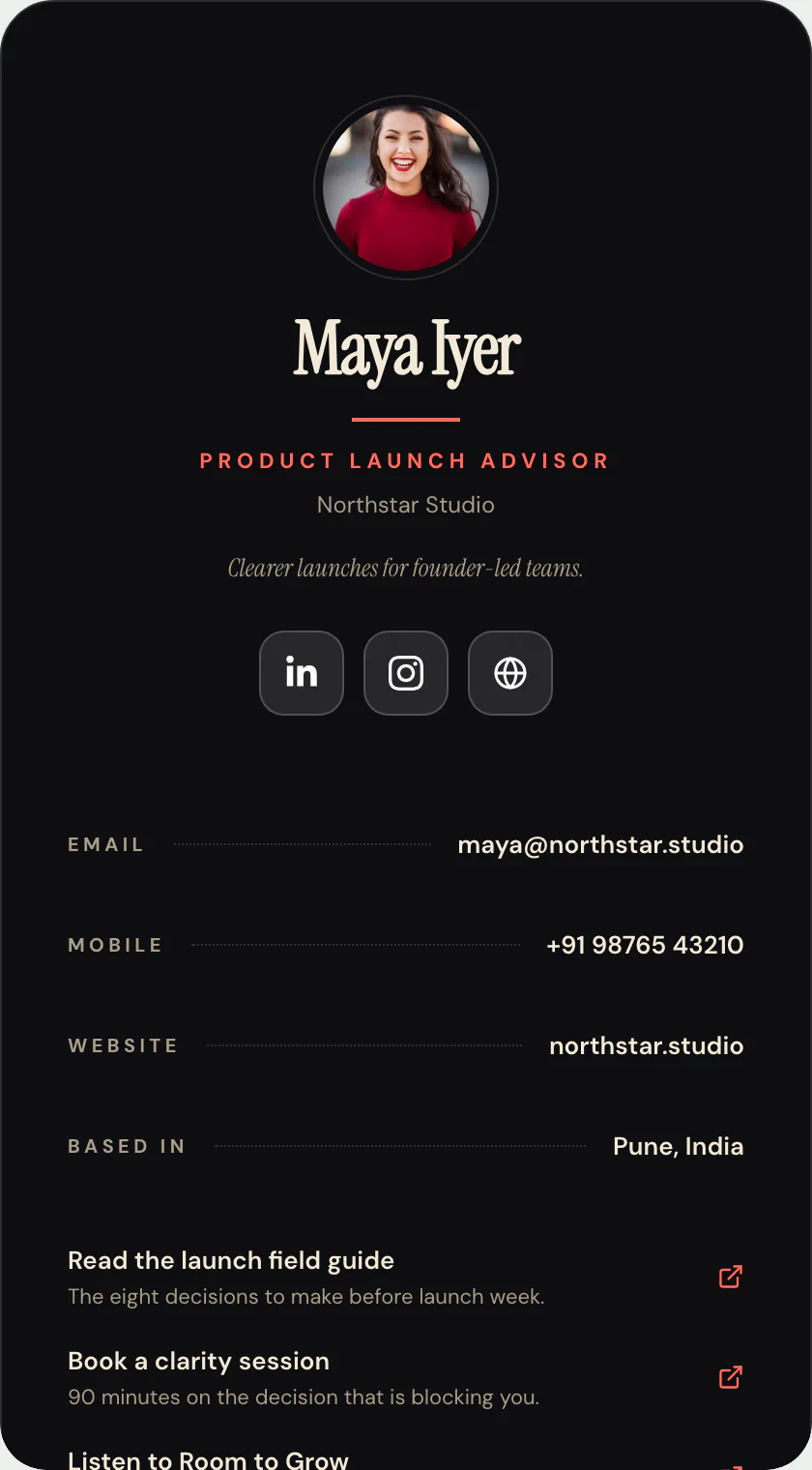
A vCard — a file ending in .vcf — is a contact card as a file: name, phone, email, role, photo, packed in a format every iPhone and Android has understood for decades. It is not glamorous. It is also the only universal way to move your details into someone's address book intact, and most digital business cards live or die by how well they produce one.
Why a thirty-year-old format still wins
The vCard predates the smartphone, and that is precisely its power: it needs no app, no account, no platform agreement between sender and receiver. Tap a .vcf on any phone and the contact sheet opens with the fields filled in. Every alternative — "screenshot my card", "I'll text you my details", "find me on the app" — leaves the other person doing data entry, and data entry is where follow-ups go to die.
When a digital business card offers a "Save contact" button, a vCard is what a good one hands over. It is the handshake at the end of the page's pitch, and its quality is measurable: open your own card, save yourself, and read what actually landed.
The fields that decide whether you get found again
Address books are searched by half-remembered context — "that tax person from the Pune conference". A vCard that carries only a name and number is findable by neither. The fields that do the remembering for people:
Version matters too, in a boring way: vCard 3.0 imports most reliably across old Android handsets and mail clients, which is why our free vCard generator produces it by default.
- Full name, spelled the way you say it
- Organization and a specific role, not just a title
- One phone, one email — the ones you answer
- A photo; faces are how most people scroll their contacts
- Your page's address, so the saved contact links back to the full story
- A note line with context, if your tool supports writing one
The file is the floor, the page is the ceiling
A vCard is a snapshot, and snapshots age: the phone that saved you in March does not know about your new role in November. That is the argument for pairing the file with a living page — the contact entry carries your page's address, and the page carries the current truth. The anatomy of that page is its own subject, but the division of labor is simple: the .vcf gets you into the address book, the address gets people back to you.
App-first card platforms handle this pairing with wallet passes and app-to-app exchanges, which work well between users of the same tool. The vCard is what works between everyone else — which, at any real event, is most people.
Test it like it matters, because it does
Send your own vCard to a friend's phone — one iPhone, one Android — and look at the result with fresh eyes. Wrong name casing, a missing photo, a dead "work" number from two jobs ago: these are the details a new contact will carry for years. Five minutes of testing fixes what no amount of page design can.