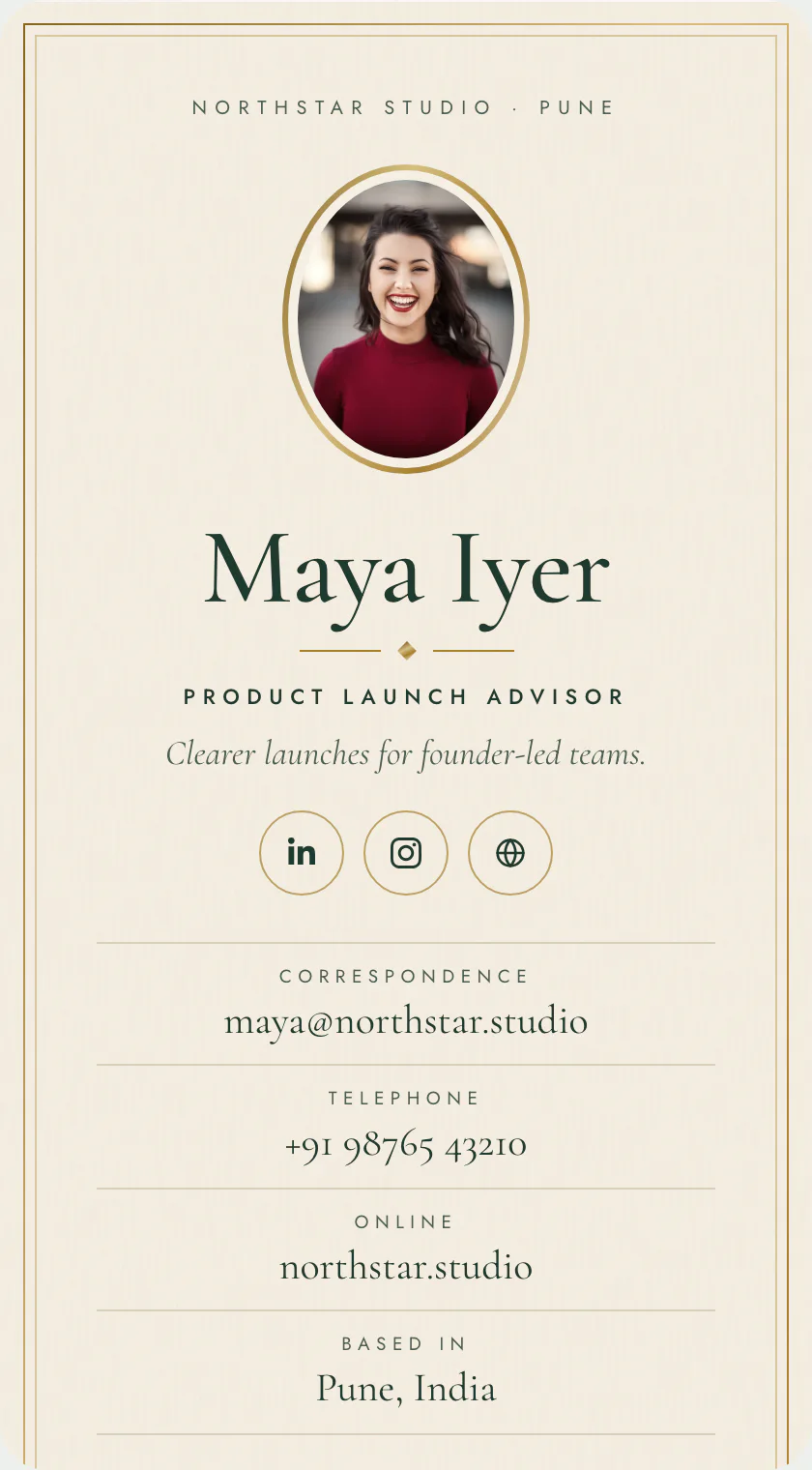
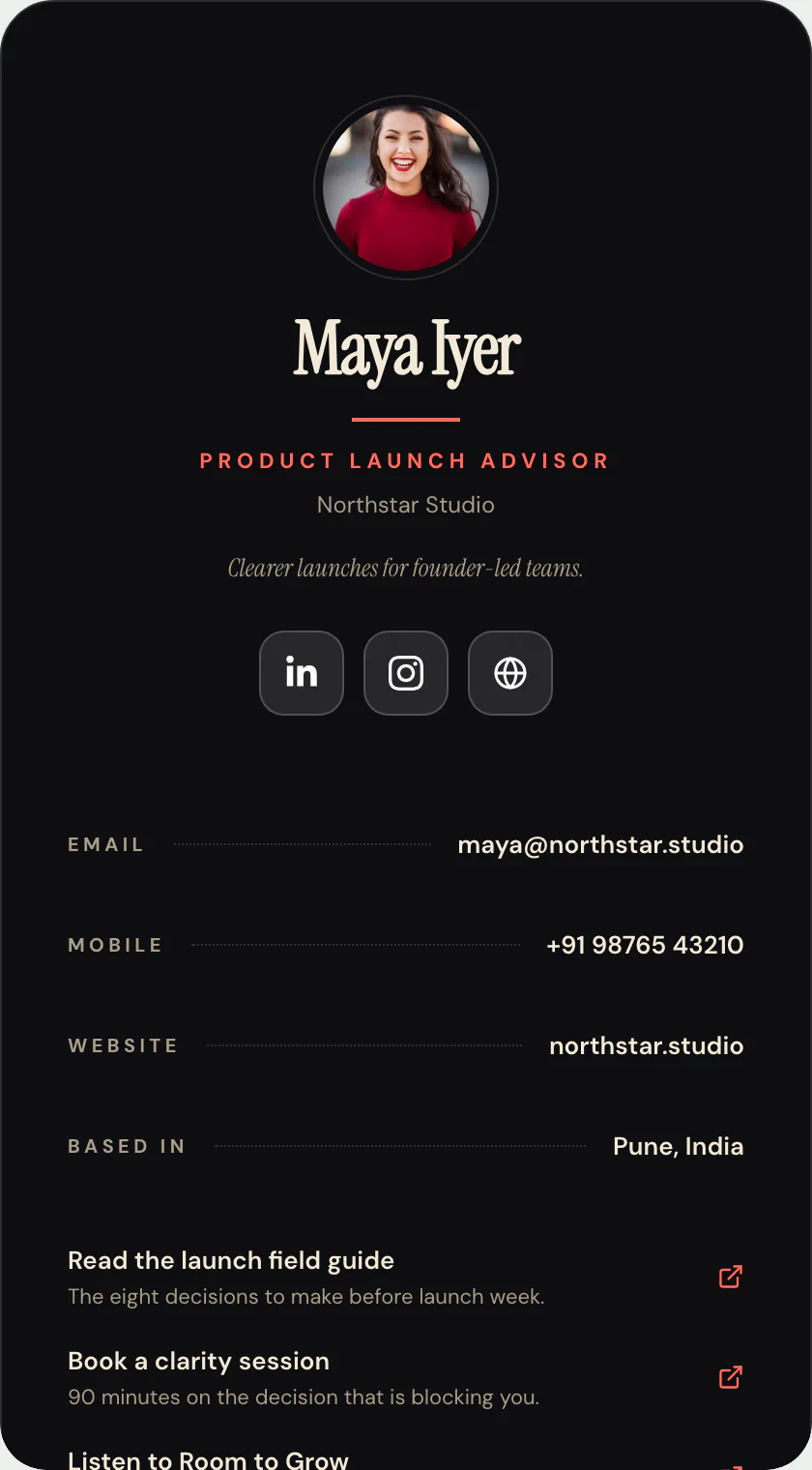
A digital business card is a web page that carries your name, role, contact actions, and a way to be saved to someone's phone. Blinq, HiHello, and Popl all make good ones. The real decision is not between their feature lists — it is between two different ideas of where your card should live.
The split that actually matters: app-first or web-first
Blinq, HiHello, and Popl are app-first. You install their app, build your card in it, and share from it — by QR code, a link, an email signature, or, for Popl especially, an NFC tap. The app is the home; the web page is the output.
Pubtact and tools like it are web-first. Your card is a page at an address you tell people, and there is nothing to install on either side. The page is the home; everything else points at it.
Neither model is wrong. App-first tools are strong on capture: scanning paper cards into contacts, logging who you met at an event, syncing leads to a CRM. Web-first tools are strong on identity: one stable address that can grow into a link page, an about page, or a small storefront without a second product.
Judge the card by the receiving end
Most comparisons dwell on the sender's experience. The receiver's experience is what decides whether the card worked. When someone opens your card, three things should be true within five seconds: they can see who you are, they can reach you in one tap, and they can save you without creating an account or installing anything.
Every serious tool passes the first two. The third is where details diverge. Test the actual save flow on both iPhone and Android before committing: open your own card on a borrowed phone, download the contact, and look at what landed in the address book. A .vcf file with clean fields beats a beautiful page that saves as a half-empty contact.
- Open your card on a phone that is not yours
- Tap call, email, and save — count the steps
- Check the saved contact's name, role, and photo
- Try it on hotel wifi, not conference wifi
What the pricing structures tell you
Blinq and HiHello both run freemium subscriptions: a capable free card, then a monthly fee for customization, multiple cards, or integrations, and per-seat pricing for teams. Popl leans on hardware — NFC cards, tags, and badges — with a subscription for the software around them. These structures make sense for sales teams, where the card is a lead-capture tool and the subscription is a CRM line item.
For an individual, the calculation is different. You will hand out a card for years, and a monthly fee for a page that mostly sits still is easy to resent. Pubtact prices for this directly — a single payment during its launch window, then a plain yearly fee rather than a monthly meter — and the same question is worth asking of any tool on this list: what happens to your card, and to the link printed on things, if you stop paying?
The link on the card outlives the card
Whatever you choose, the address you print, engrave, or embed in an NFC chip is a commitment. If it points at a provider's domain and your account lapses, the link dies with it. If it points at a page you control, you can change tools behind it.
Our full comparison with HiHello is at Pubtact vs HiHello if you are weighing that switch specifically. Whichever direction you go, write the next action as a verb before you decide: if your work is capturing leads at volume, an app-first tool earns its subscription. If your work is being reachable and worth saving, a web-first card at a permanent address is the simpler bet.