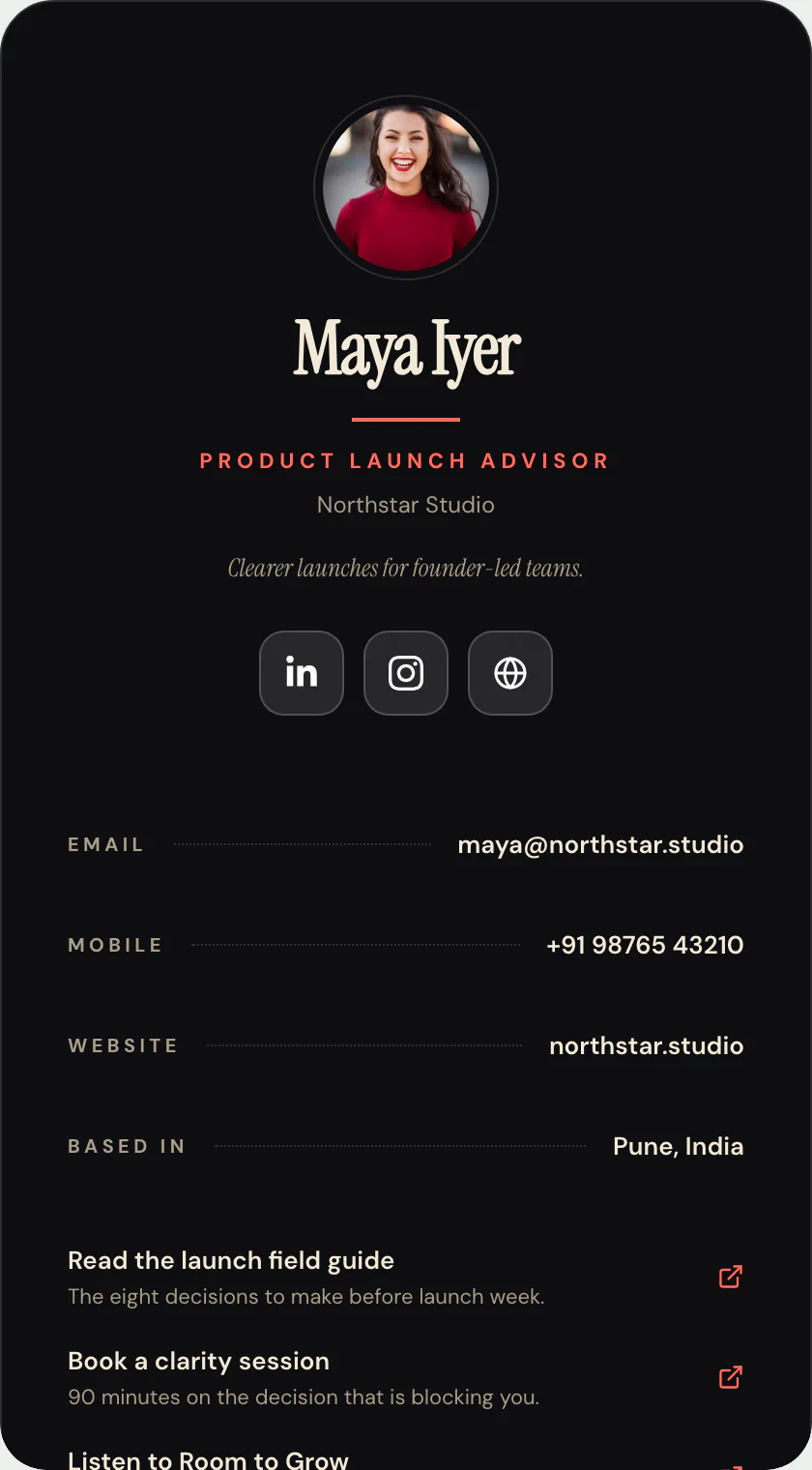
An NFC business card is a physical card with a chip that opens a web page when someone taps it with their phone. The tap feels like the product, and it is a genuinely good moment. But the chip stores exactly one thing: a URL. Everything that matters happens after the tap.
The chip is a doorway, not a card
NFC vendors sell the hardware — metal cards, bamboo cards, rings, badge tags. Popl built its business on this, and Blinq and others sell accessories too. What every one of these products has in common is that the chip simply opens a link. The page on the other side is where someone decides whether to save you.
That means the questions that matter are page questions, not chip questions. Does the page load in under two seconds on mobile data? Can a visitor call, message, and save your contact without installing anything? Does it still say the right role and company six months after you ordered the card?
Who controls the address in the chip
Most NFC cards ship locked to the vendor's platform: the chip points at their domain, and your page lives inside their subscription. Stop paying and the tap leads to a dead page — while the card in your wallet still looks brand new. Before you buy, ask one question: can I point the chip at any URL I choose?
If the answer is yes, point it at a page you control and the hardware becomes genuinely durable. If the answer is no, understand that you are buying a subscription with a metal token attached.
- Ask whether the chip URL is rewritable
- Prefer your own page address over a platform profile
- Check what the page shows if the subscription lapses
- Order one card and live with it before ordering fifty
Have the fallback ready, because taps fail
Real events are hostile to demos. Phone cases block weak chips, older Android handsets bury NFC settings, and some people simply do not trust tapping a stranger's card. The professionals who use NFC well always carry the same content in two other shapes: a QR code and a short URL they can say out loud.
A QR code designed to be scanned on the back of the card covers nearly every failure. The spoken address covers the rest — which is a quiet argument for a short, readable URL rather than a tracking link.
Where the tap genuinely earns its price
NFC is at its best in repeat, high-volume, in-person work: sales floors, trade-show booths, hospitality, real estate open houses. The tap saves ten seconds a hundred times a week, and the novelty still opens conversations. For occasional networking, a QR code on your phone's lock screen does the same job free.
Either way, the durable asset is the destination, not the hardware. Set up a contact card at a permanent address first, and let chips, codes, and signatures all point at the one page you can edit tomorrow. If you already know the tap is right for you, the practical pairing guide lives at NFC business card — bring your own tag: which page the tag should open, how to write the URL, and why the hardware should stay vendor-neutral.