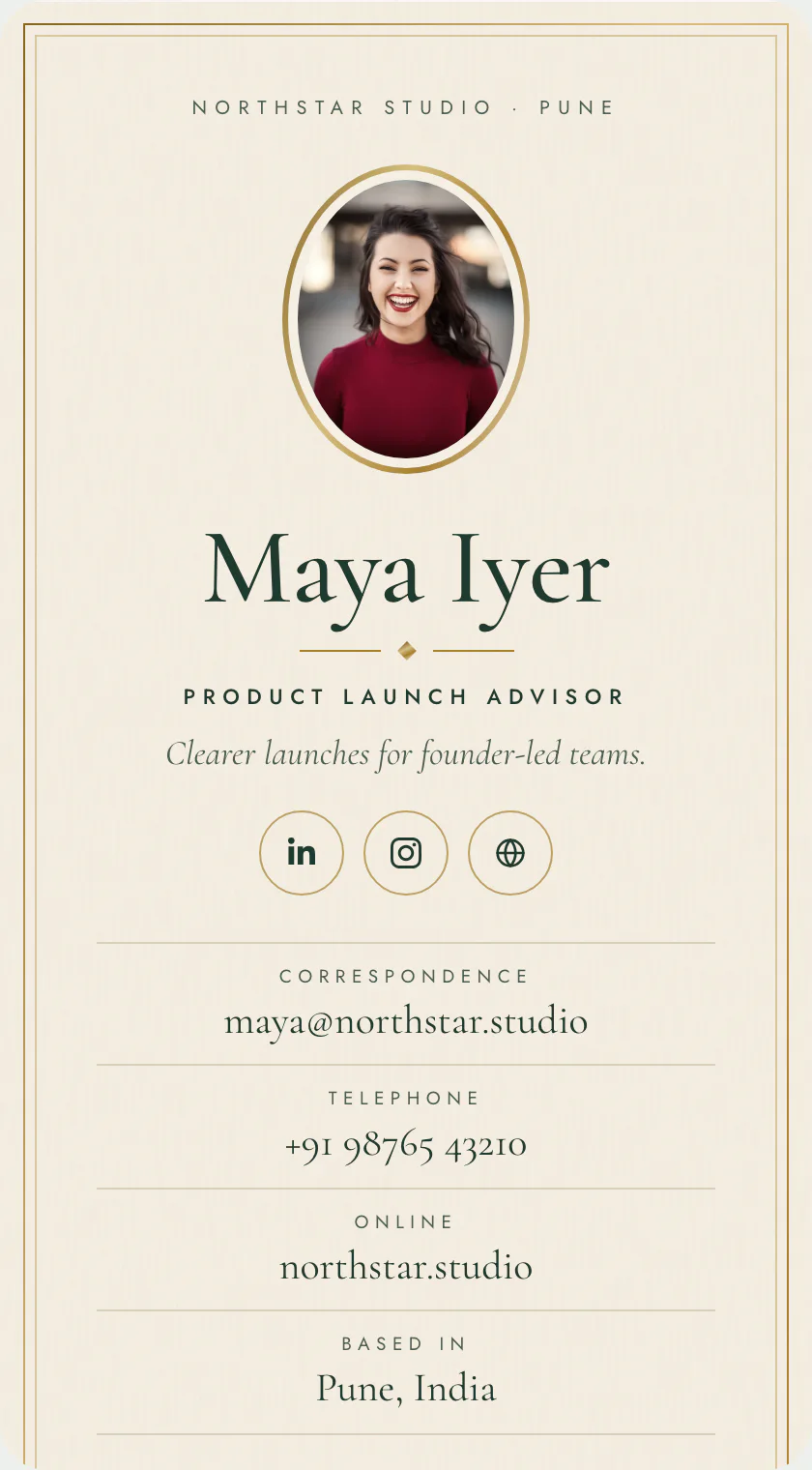
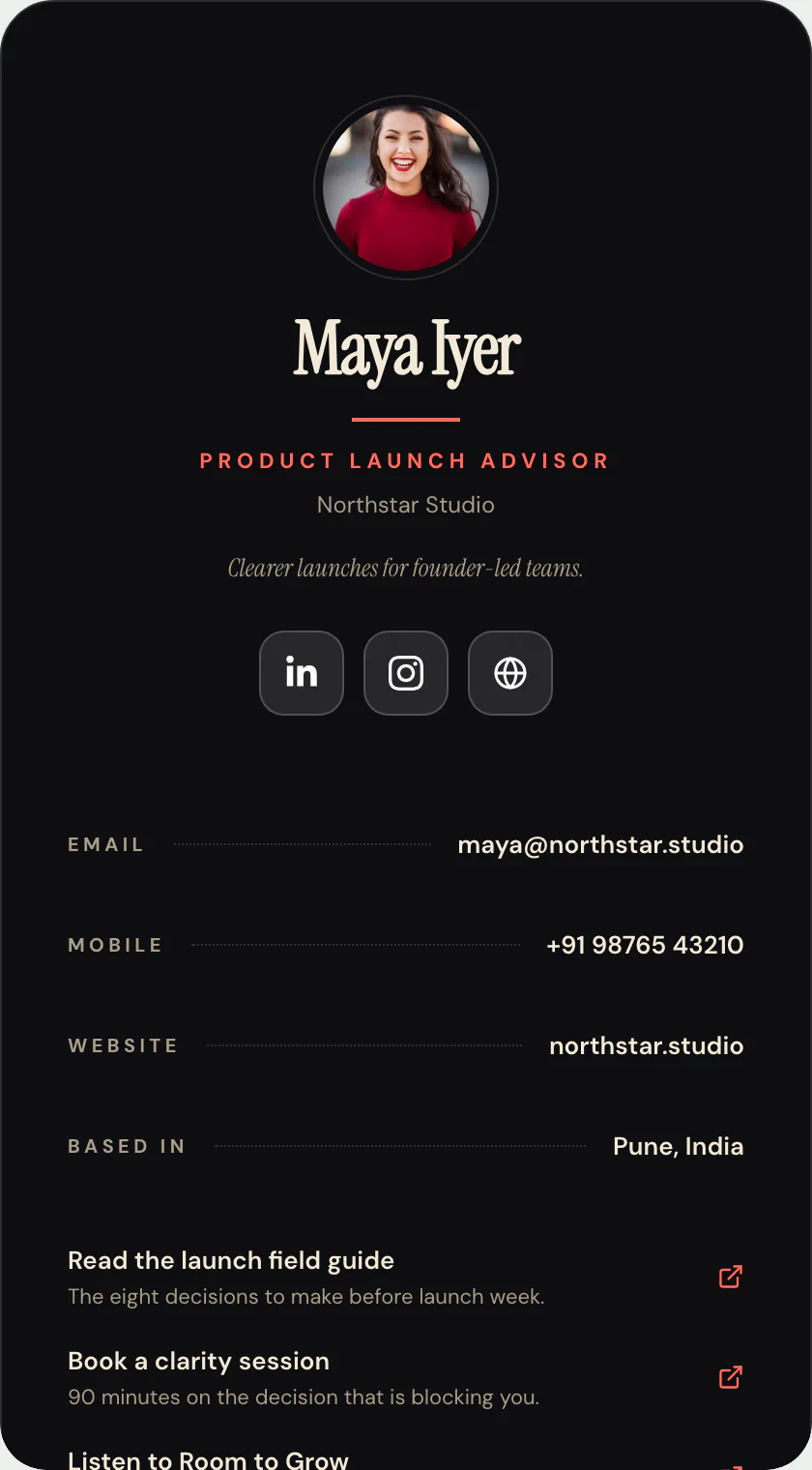
Around 2010, about.me made a simple promise: one elegant page for your name, your face, and your links. Millions signed up. Then the product changed hands more than once, the category went quiet, and the personal homepage was declared dead. It was not. It just split into pieces.
The promise was right, the container was wrong
about.me got the insight exactly right: people need a page that answers "who is this?" better than a search result does. What the era got wrong was treating that page as a static splash screen — a photograph, a paragraph, and a row of icons. It was a business card that could not do anything.
When social platforms started offering profiles with feeds, followers, and messaging built in, the static splash page lost. Not because people stopped needing a page of their own, but because the profiles were where life actually happened. about.me survives today in pared-down form, and builders like Carrd took over the one-page niche for people happy to assemble a page themselves.
The homepage did not die, it fragmented
Look at what a working professional maintains in 2026: a LinkedIn profile for employment, an Instagram for the personal brand, a link-in-bio page for routing, maybe a calendar link and a payments handle. Every one of these is a fragment of what the personal homepage was supposed to be — and every one lives on rented ground, ordered by someone else's algorithm, wearing someone else's chrome.
The fragmentation is why introductions feel scattered now. Asked "where can I find you?", most people hesitate, then name two platforms and spell out a handle. That hesitation is the personal homepage's job description, still unfilled. We wrote about the employment-shaped corner of this in LinkedIn is your résumé, not your page.
What a personal page has to do differently now
A page of your own only earns its place if it does what platform profiles cannot:
That last point is the quiet lesson of about.me: a page for your name has to outlast the company that hosts it, which is a pricing-model question as much as a technical one. It is why Pubtact prices its about page to be kept rather than rented by the month — a single payment while the launch offer runs, a flat yearly fee after it — because a page for your name has to be priced to survive.
- Answer "who is this?" in one screen, in your own words and order
- Offer real actions — save my contact, book time, message me — not just links out
- Change shape as your work changes, without changing its address
- Belong to you, on an address that survives any platform's redesign
Build it as an introduction, not a monument
The old personal homepage failed partly because it was a monument — carefully assembled once, never touched again. The version that works is closer to a well-kept introduction: current role, a few lines of story, selected work, and one obvious next step. Update it when your work changes, and let every scattered profile point back to it. The homepage did not die. It was just waiting for something worth pointing at.