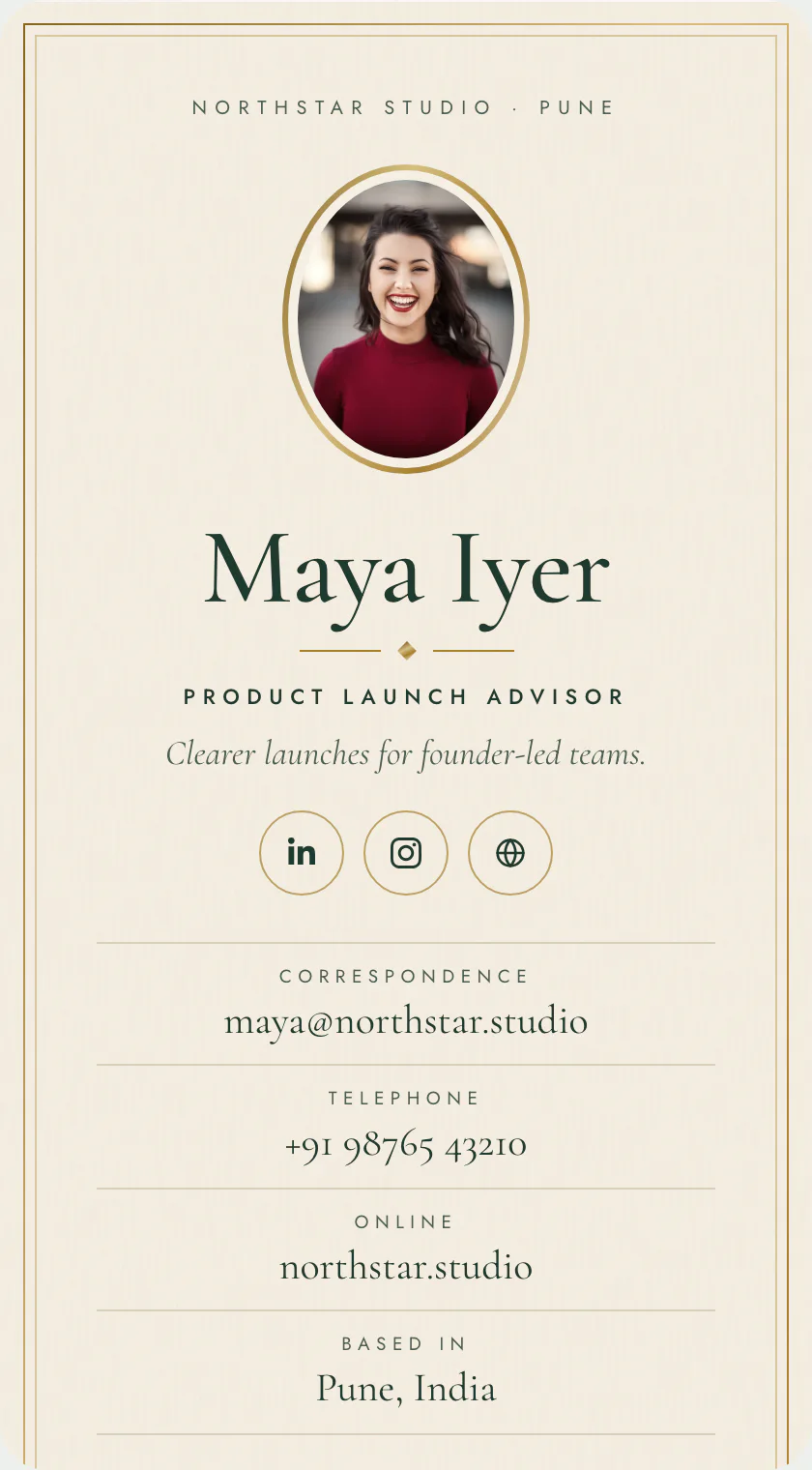
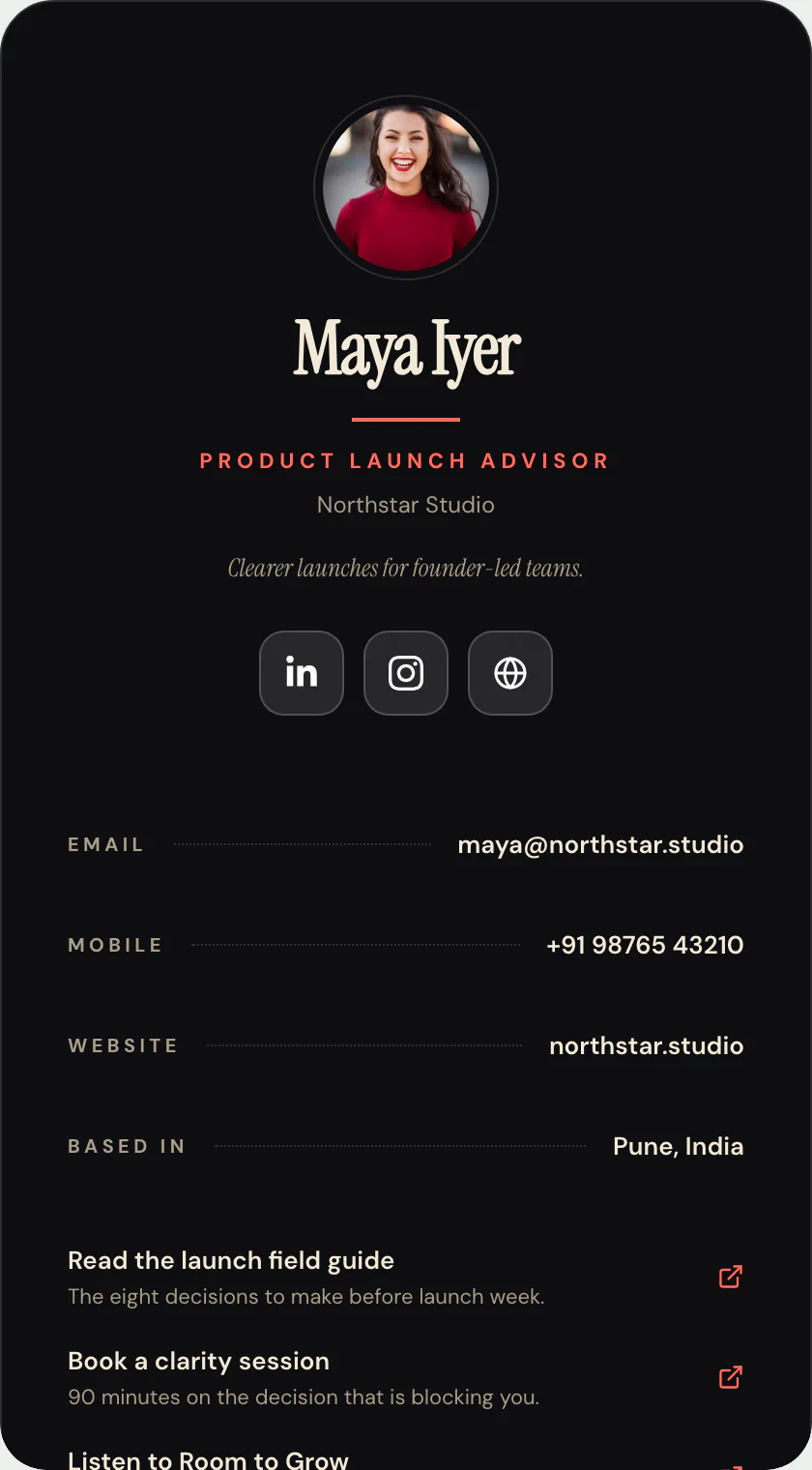
"Just check my LinkedIn" feels like an answer, and for recruiters it is. For everyone else — the client comparing consultants, the event booking a speaker, the founder checking out an advisor — LinkedIn answers a question they did not ask, in an order you do not control, behind a login wall some of them will not cross.
What LinkedIn is genuinely for
Be fair to the platform: LinkedIn is the system of record for employment. Recruiters live in it, background checks route through it, and its network effects are unbeatable for job-shaped opportunities. If you are employed or want to be, maintain it well. Nothing below argues otherwise.
The trouble starts when a profile built for employment becomes the default answer to every "who are you?" — because its format is fixed by the platform, its order is reverse-chronological employment whether or not that flatters you, and its sidebar advertises people who do what you do.
The questions LinkedIn cannot be arranged to answer
A prospective client asks: what exactly do you do, for whom, and what does working with you look like? A conference asks: what do you speak about, and where is a photo we can print? A journalist asks: how do I reach you today, not through a message queue you check weekly.
Each of those readers needs a different first screen, and LinkedIn gives all of them the same one. A page you control can lead with the answer for your actual audience:
- Consultants: the problem you solve, proof, and a booking link
- Speakers and creators: topics, clips, a photo, one contact action
- Freelancers: selected work with outcomes, then price shape
- Anyone: contact actions that work without a login
The login wall and the algorithm you do not control
Two structural issues follow the profile everywhere. Logged-out visitors hit prompts and truncated views — real friction for the client just trying to read about you. And the profile's surroundings — feed, reactions, "people also viewed" — are engagement machinery, not your presentation. The platform decides what sits next to your name; that arrangement serves its goals, not yours. None of this is malice. It is just what it means to be a page inside someone else's product, a pattern we traced across a decade in whatever happened to the personal homepage?
Keep both, point one at the other
The resolution is not deleting LinkedIn; it is demoting it from front door to reference document. Build an about page that answers your real audience's question in one screen — your words, your order, no login — and let it link out to LinkedIn for the employment record, the way a homepage links to a CV. Put the page in your bio links, your email signature, and your introductions. When someone asks where to find you, the answer becomes one address that you arranged — which is, quietly, the whole point.