Count the emails you send in a year — for most working professionals it runs into the thousands. Every one carries your signature to someone who, by definition, is already dealing with you. That is a distribution channel with perfect targeting and zero cost, and most people load it with a name and a phone number formatted in 2011.
What a signature is actually for
A signature has two audiences. The colleague who emails you daily ignores it. The new contact — the prospect, the recruiter, the journalist, the vendor — reads it once, in the first exchange, exactly when they are deciding who they are dealing with. Design for the second audience.
That reader needs three things: who you are, what you do stated specifically, and one place to go next. "Priya Nair · Independent tax advisor for early-stage teams" tells a story; "Priya Nair · Founder" does not. The one place to go next should be a single link — your page — not a row of six icons competing for a click nobody will make.
The mechanics that survive email clients
Email clients are ruthless with markup. Outlook renders with Word's engine, Gmail strips styles it dislikes, and dark mode inverts colors you thought were safe. The signatures that survive share a boring recipe:
Our free signature generator builds mail-safe markup with exactly these constraints, because hand-writing table-based HTML in 2026 is nobody's idea of a good afternoon.
- Tables and inline styles, never modern CSS layout
- Live text, not an image of text — images get blocked and say nothing when they do
- Icons as small hosted images, not embedded graphics
- Four lines maximum; scannable beats complete
One link that carries the rest
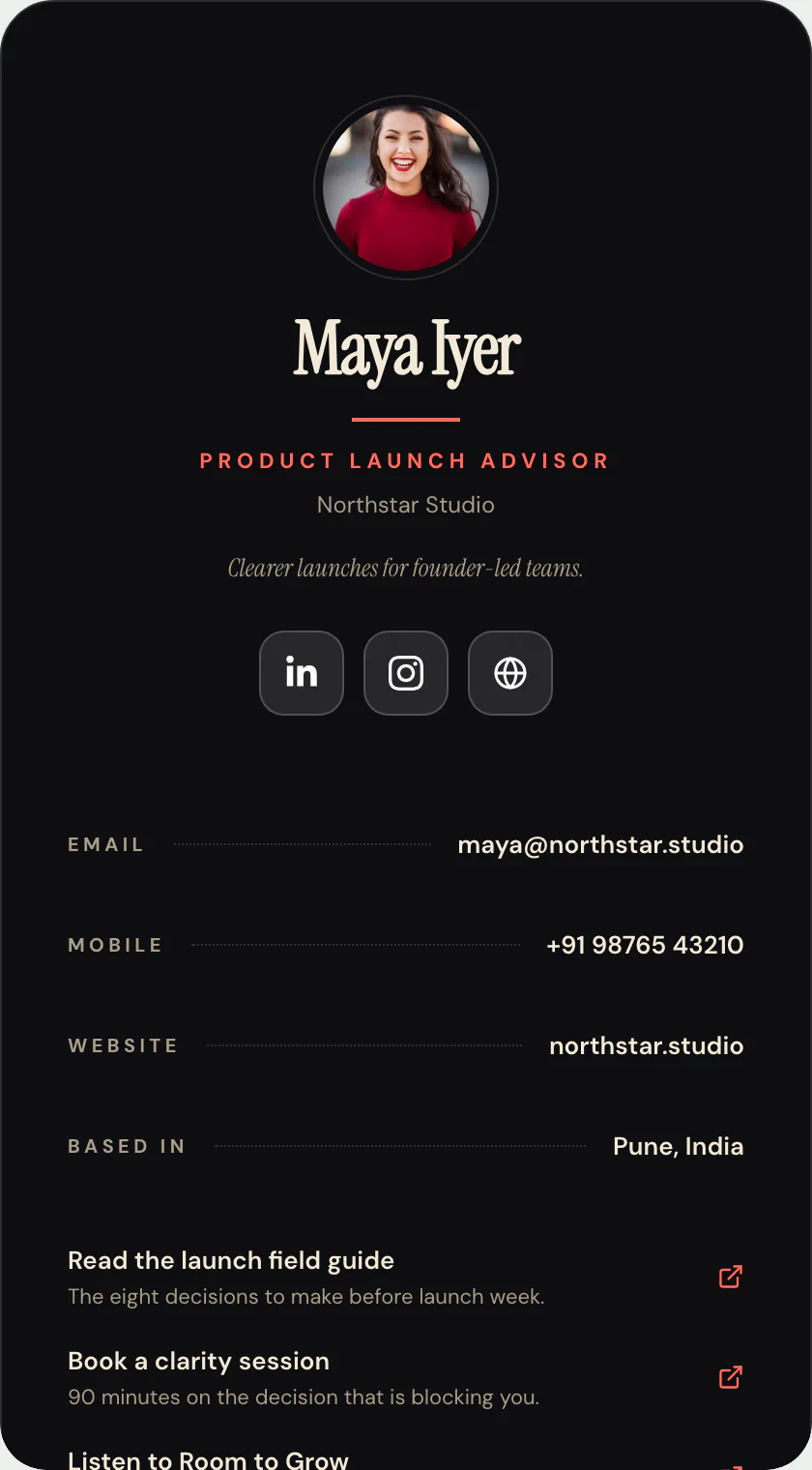
The strongest signature move is replacing the icon row with a single line: your name as a link to your contact card. The recipient who wants your number, your booking link, or your LinkedIn finds all of it there — and can save you as a contact in two taps, which no signature line can do on its own.
This also solves the update problem. A signature is deployed across every device and half-remembered webmail setting you have; a page is edited once. When your role changes, change the page and let the thousands of already-sent signatures keep pointing at the current truth.
Set it once, honestly
Write the signature for the stranger, keep it to four lines, link it to one page you keep current, and then stop thinking about it — that is the entire practice. A channel you own, reaching only people who already talk to you, carrying one accurate link: no campaign you will run this year has better economics.